
Things Falling Apart
Reading British Catholic Satire of the 1970s Today: Part 1

How did it come to this, we might well ask, of things in both the Church and the world. In looking back on the origins of present discontents, it can sometimes seem that any period of the past contributed something to the present bonfire of our certainties, but there’s a fair degree of agreement that something crucial happened in the 1960s, a cultural revolution, the ramifications of which are very close to our own religious and political upheavals. Our present, however, looks more like the Seventies, the first decade when the consequences of the Sixties’ upheaval began to make themselves really felt, and it’s sometimes remarked that, if the Sixties was the party, then the Seventies was the hangover. If so, what a long one it’s been.
There was something etiolated about the Seventies, in all sorts of ways. Sixties’ energy and inventiveness was congealing into something tired and hollow. In Britain, the post-war boom was petering out, leading to social unrest, unemployment and inflation. There was the oil crisis of 1973, striking miners, power-cuts, and the IMF bailout in 1975. In America, the Vietnam war was dragging on, and then Watergate (the first-ever-gate). Yet more moon landings happened, their wonders now routine. There was extreme-left terrorism in Europe, and IRA outrages at home. How strange the decade appeared, even at the time, as in the gender-bending of men’s fashions, all polyester flared trousers, frilly shirts, platform shoes, kipper ties, and long hair; the garishness of interior décor, with pottery cups and macramé for stylish detail, and at the same time a vaguely brown background (both literal and figurative) to everything. However much I might look back nostalgically to this period of my youth, I remember too that I couldn’t wait to become one of the young fogeys of the 1980s, when male dress-sense seemed to come back to normal, and with the election of Pope John Paul II in 1978, Margaret Thatcher in 1979, and Ronald Reagan in 1980, it seemed that what Rudyard Kipling called ‘the gods of the copy-book headings’ had really returned, and perhaps normality could once more be in the ascendent. It didn’t last.
Sixties’ idealism had promised so much, particularly in the way of freedom. In Britain, liberal legislative change, under a Labour government, became serious. The death penalty was abolished in 1965, and homosexual activity in private in 1967; abortion was legalized in 1967, and racial discrimination outlawed in 1968; divorce was liberalized in 1969. The contraceptive pill had been first made available in 1961, and its use expanded throughout the decade. The ‘permissive society’ had taken shape, but as the Seventies wore on sexual freedom was already showing its dark side, to become (for example) the AIDS epidemic in the early Eighties. The Seventies was the age, too, of a ‘uniparty’. Enoch Powell said the 1974 general election was between a man with a pipe and a man with a yacht: that was the only significant difference between Wilson and Heath. Both Labour and Conservative governments continued the post-war consensus of state-intervention in all possible aspects of public life, apparently to increasingly ill effect as the decade went on.
The Sixties of course was a time not only of cultural and political revolution across the Western world, but also of revolution within the Catholic Church. The Second Vatican Council met between 1962 and 1965, promulgating a new understanding of the nature of the Church and its relations with the secular world – a new ecclesiology – and initiated new liturgical forms, similar to those in use among Protestants. More liberal doctrine, particularly in relation to sexual morality, was widely expected, and a ruling on the use of artificial contraception (which had already become widely used in Catholic marriages) was eagerly anticipated. This came with Pope Paul’s letter Humanae vitae (1968), which – unexpectedly – reaffirmed traditional Catholic teaching that artificial contraception violated the natural moral law. But on this, as in so many other ways, the horse called ‘The Spirit of Vatican II’ had already bolted, taking the stable door with it. To many within in the Catholic Church, and to traditionally-minded observers outside it, it seemed as if, in the decisions of the Second Vatican Council and its aftermath, the foundation of Western civilization, the ancient, Roman, Catholic, and Apostolic Church, had fallen to the spirit of the age, and lost its mind.
So much was new in the 1970s, and yet, too, so much of the older world of the twentieth century (now of course long gone) was still strongly present. The Second World War, for instance, was only twenty to thirty years past, and the post-war consensus has really been built on its immediate consequences, which in Britain had been Clement Atlee’s socialist Labour government, elected in a landslide vote in 1945. It established the welfare state, including the National Health Service, which most British people supported then as now, as a good beyond party politics. The country was still largely socially conservative, whether people voted Labour or Conservative. Then came Punk Rock, and the Sex Pistols blithely using the f-word on prime-time evening television in 1976, in a genuinely shocking moment. In that sense, how far away the Seventies seem, how relatively innocent on the surface, and how much that is now routine in our changed culture would have been inconceivable to most people then.
In respect of the old world hanging on, it is interesting, and in some ways surprising, to note the continuation into the Seventies, and a little beyond (it is long gone now), of the Catholic presence among our leading literary artists. Since the Catholic Revival of the nineteenth century, and the phenomenon of conversion to Catholicism which reached deeply into the British literary world, it had been the case for some time that many of the leading writers were (and were known to be) Catholics. The early years of the twentieth century were still much marked by the conversions of many of the fin de siècle writers, the Decadents of the later nineteenth century, and the next generation included the towering figure of G. K. Chesterton. In the mid-century, with Graham Greene and Evelyn Waugh, it might be said that the commanding heights were now occupied by Rome. In the 1970s, it was still the case, with writers such as Muriel Spark, Alice Thomas Ellis, Anthony Burgess, and David Lodge, that Catholics remained in the forefront of new literary fiction.
This essay will look at four works of fiction, published four years apart, giving Catholic perspectives on changes happening in the Church and the world. In Spark’s The Takeover (1976), Thomas Ellis’s The Sin Eater (1977), Burgess’s Earthly Powers (1980) and Lodge’s How Far Can You Go? (1980), a notable common feature is the use of satire in regard to those social changes visible in the Seventies. In a way, this suggests the more significant influence of Waugh, rather than Greene, but there is also ‘an interest on the dangerous edge of things’ (to recall Green’s phrase, quoting Browning, about his own fiction), involving fine distinctions in moral questions, which Greene was well-known for proposing. The satire, however, proceeds from the more conservative perspectives of these writers (although that tricky adjective needs heavy qualification in the case of Lodge); satire, after all, tends to work within a frame of reference grounded in traditional morality. In this respect, the books have worn well. They are still tremendously funny, and morally relevant to our own world, even as they reveal the darker state of the 1970s.
Evelyn Waugh (provocatively and a little disingenuously) rejected the term ‘satire’ for his own books, writing (in 1946) that
satire is a matter of period. It flourishes in a stable society and presupposes homogeneous moral standards – the early Roman Empire and eighteenth-century Europe. It is aimed at inconsistency and hypocrisy. It exposes polite cruelty and folly by exposing them. It seeks to produce shame. All this has no place in the Century of the Common Man where vice no longer pays lip service to virtue. The artist’s only service to the disintegrated society of today is to create little independent systems of order of his own. I foresee in the dark age opening that the scribes may play the part of the monks after the first barbarian victories. They were not satirists.
While there is some force in Waugh’s insight, including in the need for a common frame of reference among writer and readers if satire is to ‘work’, and while Waugh is also prophetic about the course of disintegration in Western society, evident to him seventy-five years ago, he underestimates the capacity of common humanity to understand and appreciate satirical humour, as evidenced by his continuing readership and critical regard, even beyond the Catholic world. His admirers included the four writers under review here and, like Waugh, they cast a searching eye on themes that go back to the cultural upheavals of the 1920s, which Waugh dissected so memorably: the myth of free love; ecstatic addictions in music and drugs; bogus religions and new cults; the collapse of authority; the shock of the new; the fake and the ersatz in a world which won’t or can’t face reality, and which becomes incapable of love and faith. In our writers of the 1970s, however, the cultural upheavals have reached further, and into the Church itself, which also becomes, in their work, an object of satire.
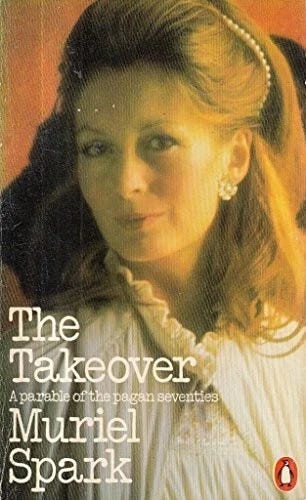
Muriel Spark was born, in 1918, in Edinburgh, her father the son of Jewish-Lithuanian immigrants, and her mother an English Anglican. Spark received a Presbyterian schooling, but was received into the Catholic Church in 1954, spending much of her life in Italy, the setting of her fourteenth novel, The Takeover. A lesser-known work, compared to some of her other novels, it is subtitled on the cover of one edition as, ‘A parable of the pagan seventies’. The ‘takeover’ is ostensibly an attempt by a glamorous wealthy American, Maggie Radcliffe, married to an Italian aristocrat, to evict her tenant, Hubert Mallindaine, an effete and mendacious English writer. He is also busily taking over the villa in which he lives, copying her paintings and antique furniture and selling off the originals. He manufactures a fictional pedigree of descent from the Roman goddess Diana, and begins a new pagan cult in her honour, something of much interest to two visiting American Jesuits, making a study of ‘ecological paganism’. Maggie’s attempts to rid herself of Hubert ultimately founder in the complexities of Italian property law, in the process she loses all her money to a shifty financier, and Hubert’s cult dissolves in ludicrous chaos.
The Takeover, set between 1973 and 1975, includes much in the way of sexual and financial liberties, and the instability of relationships is linked with the instability of money after the 1973 oil crisis. So much of the modern world, suggests Spark, is insubstantial, relying on bogus narratives, such that trust becomes impossible, and reality is hidden beneath a series of moving facades. The interplay between Hubert’s fake paganism and the vaguely sinister Jesuits (who remind me, in ways for which I cannot fully account, of the two assassins, Mr Wint and Mr Kidd, in Ian Fleming’s Diamonds are Forever, the film version of which came out in 1971), provides a particularly rich vein of satirical humour, particularly as the Jesuits show a good deal of interest in the sexual element of Hubert’s proposed pagan ritual. Hubert is shameless in admitting his religion is made up; ‘Appearances are reality’ he says, and to the Jesuits he asserts, ‘I say even your religion is based on the individual perception of appearances only. Apart from those, there is no reality.’ Despite his denials of this radically subjective view, Father Gerard is made to look suspiciously syncretic in his approach to religion: ‘The Church continues to absorb many pagan nature-rituals because the Church is ecology-conscious’, a statement we can only agree with today in light of Laudato si, onto which of course Spark throws an amusing light. Hubert grandly announces:
To us… who are descended from the ancient gods, your Christianity is simply a passing phase. To us, even the God of the Old Testament is a complete upstart and his Son was merely a popular divergence. Diana the huntress, the goddess of nature, and ultimately of fertility, lives on. If you poison her rivers and trees she takes her revenge in a perfectly logical way. The God of the Christians and the Jews – where’s the logic in him?
The Dionysian and orgiastic rites Hubert has in mind would suggest that there is indeed something quite different from Christianity about his beliefs, but Spark builds her satire on inter-religious dialogue further.
Never one to stand on principle, where his own self-aggrandisement is concerned, Hubert thinks he might tap into the potential presented by pilgrims coming to Rome for the Holy Year of 1975:
What Hubert had in mind for his final project was to try and syphon off, in the interests of his ancestors Diana and her twin brother Apollo, some of the great crowds that had converged on Rome as pilgrims for the Holy Year, amongst whom were vast numbers of new adherents to the Charismatic Renewal movement of the Roman Catholic Church … Studying their ecstatic forms of worship and their brotherly claims it seemed to him quite plain that the leaders of these multitudes were encroaching on his territory. He felt a burning urge to bring to the notice of these revivalist enthusiasts who proliferated in Italy during the Holy Year that they were nothing but schismatics from the true and original pagan cult of Diana. It infuriated him to think of the crowds of charismatics in St Peter’s Square, thumbing their guitars, swinging and singing their frightful hymns while waiting for the Pope to come out on the balcony.
The identification here of charismatic worship with paganism (rather than Protestantism) is an amusing exaggeration, perhaps, but it does point the reader towards similarities which bear consideration, particularly in regard to the objective value (or otherwise) of the emotional experience involved. Spark’s satire works in two directions, against fake paganism and dubious forms of Christianity, and in the uproarious pagan rite at the end of the book, the line between it and the charismatic Mass, with extensive kissing at the Kiss of Peace, is hilariously blurred. The ‘takeover’ to which Spark refers is ultimately that of a civilization, represented by the gracious Italian villas, with their classic paintings and antique furniture, by a fraudulent money class, and includes the takeover of the Church by New Age ideas, peddled by churchmen who see all religious practice as interconnected and originating in ‘nature’. Remarkably, fifty years on, Spark’s satire still bites; perhaps, even more so.
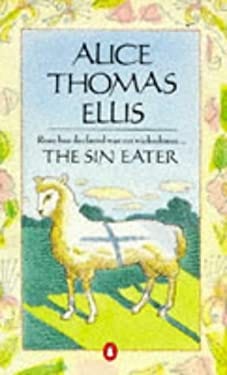
Alice Thomas Ellis was the penname of Anna Haycraft, born in Liverpool in 1932. At the age of nineteen, she converted to Catholicism and tried her vocation in a convent, but was unable to continue for health reasons. She moved to Chelsea, having studied art, and adopted a Bohemian lifestyle, dressing in a Goth-like black, and then married the publisher Colin Haycraft, with whom she had seven children. Although she looked the archetypal arty feminist, she actually espoused traditionalist and anti-feminist ideas. Horrified by the doctrinal and liturgical changes of Vatican II, she wrote her first novel, The Sin Eater (1977) partly as a response. The story is set on a single summer weekend in the mid-Seventies; the hot weather suggests 1975. A family gathers at their ancestral home, as the elderly father lays dying. The central character, Rose, is the wife of the eldest son, and she runs the household, manipulating and controlling, with cold glee, contemptuous as she is of the effete family she has married into. As in Spark, the presence of evil, frequently manifested in the use of power over others, is readily apparent, and the ending of the novel, with its impending tragedy, comes as a shock. Most of the characters are motivated by selfishness and self-indulgence, in contrast to the self-disciplined, if malicious Rose, whose contempt for changes in the Church is of a piece with her disdain for the moral weakness of those around her.
Rose’s sister-in-law asks her about becoming a Catholic, but Rose replies that nobody does that anymore; nowadays, everybody leaves it, explaining why:
‘They modernised it,’ said Rose, taking up the thread. ‘They fell victim to the municipal line of thought which goes: “That’s beautiful. It must be old. We’d better knock it down.”’
The modernising destruction extends to the Mass:
‘At the consecration, ‘[Rose] said dreamily, ‘they do a sort of advertiser’s announcement… I think it’s meant for the enlightenment of the credulous, who previously thought [the consecrated wine] came straight from heaven in vast ethereal tankers. And they’re creeping up on transubstantiation, circling it with a net. It’ll be the next to go, and then heigh ho for the gates of Hell.’
Rose does, however, spare her parish priest from complete condemnation:
‘To do him justice,’ said Rose, ‘he does still dress in the proper fashion. He hasn’t taken to going round in jeans and a T-shirt and a little cross on a chain round his neck imploring people to call him Roger, and he hasn’t left the church to marry and devote his life to rewriting theology to conform with his own lusts and itches, and drivel on about the self-transcending nature of sex, like all these treacherous lecherous Jesuits mad with the radiant freedoms of contemporary thought. But it isn’t enough. Now the Church has lost its head, priests feel free to say what they think themselves, and they don’t have any thoughts at all except for some rubbish about the brotherhood of man. They seem to regard Our Lord as a sort of beaten egg to bind us all together…’
Following this startling image comes an even more remarkable one as Rose’s peroration of ecclesiastical criticism is reached:
‘It is as though,’ she went on, ‘one’s revered, dignified and darling old mother had slapped on a mini-skirt and fishnet tights and started ogling strangers. A kind of menopausal madness, a sudden yearning to be attractive to all. It is tragic and hilarious and awfully embarrassing.’
As Alice Thomas Ellis wrote of The Sin Eater in her first work of non-fiction, Serpent on the Rock: A Personal View of Christianity (1994), ‘The heroine was not a nice woman, for I was also fed up with women whining about their powerlessness… Rose, as I called my creation, was a Roman Catholic who felt freed by the changes in the Church, not to express herself as a child of God liberated from the old constraints, but to behave as badly as she liked, given over to original sin.’ Thus the author neatly skewers the pseudo-Rousseauistic idea that the elimination of constraints in the Church (as in society) will free everyone’s natural goodness, rather than the desire to act simply as they like. Thomas Ellis also notes that the book was written ‘before Political Correctness arrived on our shores’, and her humour would not find easy acceptance in some quarters today, but it still resonates in regard to its familiar object, still here after fifty years.
This is first-rate Andre - fascinating, stimulating, thought provoking.
I was born in 1970, and like yourself I look back on that era and often see only happy, innocent times. Life was simpler and clearer in so many ways - just 3 TV stations, for instance, all of which had a cut-off time at night and none of which (except ITV maybe) were even 'on' all throughout the day.
Yet looking back now, I can see plainly that being born into such a time of progressive ferment both in the Church and in the West as a whole, has actually been the root cause of so many of the difficulties and challenges I've faced since. And what goes for the micro level goes for the macro too.
I've not yet read any of Alice Thomas Ellis's novels yet, but I used to enjoy her column in The Catholic Herald and (I think) The Telegraph in the '90s. A great Catholic voice and a truly anti-estsblishment figure. A woman of rare soul and spirit 👍 👏